
Why India Is the World's Largest Psyllium Husk Producer: Market Data, Growing Regions, and Supply Reliability
An in-depth analysis of India's 85%+ global dominance in psyllium husk (Plantago ovata) production. Explores Gujarat and Rajasthan growing regions (Sidhpur, Unjha, Jodhpur), harvest cycles, processing technology, purity grading (85% to 99%), global market trade data, and procurement strategies for pharmaceutical, nutraceutical, and food buyers.
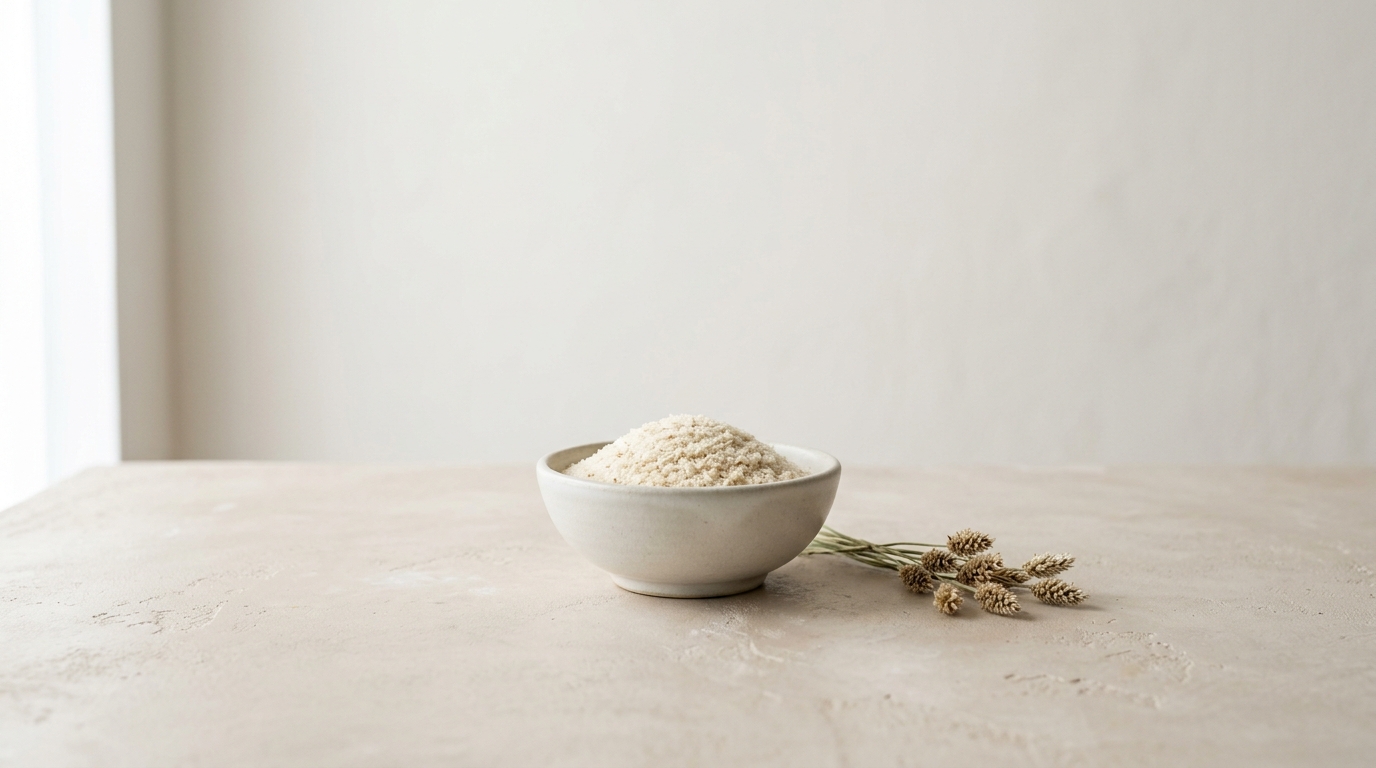
India controls over 85% to 90% of the world's commercial psyllium husk supply (Plantago ovata / Isabgol), exporting more than 40,000 metric tons annually to pharmaceutical, nutraceutical, and commercial food manufacturers globally.
This market concentration is driven by a unique agro-climatic monopoly in Northern Gujarat (Sidhpur, Patan) and Western Rajasthan (Jodhpur, Jalore), where arid rabi winter conditions provide the zero-rainfall maturation windows required for high-mucilage seed harvesting. Sourcing certified Psyllium Husk and Psyllium Husk Powder (40–100 mesh) directly through Lokavia guarantees USP/EP pharmacopoeial grade purity (85%–99%), verified swelling volumes ($\ge 40\text{ ml/g}$ to $\ge 55\text{ ml/g}$), and ETO-free steam-sterilized lots with standard MOQ starting at 2,000 kg.
Global Market Overview: India's Psyllium Monopoly
Psyllium husk—the dry outer seed coat of Plantago ovata—is nature's richest source of soluble dietary fiber (yielding over 80% soluble mucilage fraction). Unlike other agricultural commodities where production is geographically dispersed, global psyllium trade is anchored almost exclusively in Northwest India.
Key Trade Data & Market Drivers
- Global Market Share: India produces and processes 85%–90% of all commercially traded psyllium seeds, husks, and powder worldwide. Minor supplemental cultivation occurs in Pakistan and Iran, but India dominates refined pharmaceutical exports.
- Annual Export Volume: India exports between 38,000 to 45,000 metric tons annually, generating over $250M to $320M USD in foreign exchange.
- Major Destination Markets: The United States represents the largest importer (~40%–45% of Indian exports), followed by Germany, the United Kingdom, Japan, Australia, and Italy.
- Core Industry Demand: Expanding at an 8.2% CAGR, driven by prebiotic gut health supplements, companion nutrition for GLP-1 users, and clean-label gluten-free baking binders.
Agro-Climatic Requirements: Why Northwest India Dominates
The reason India maintains supply dominance lies in the delicate climatic requirements of Plantago ovata:
- Sowing & Soil Prep (October – November): Mild temperatures and well-drained sandy loam soils provide optimal germination conditions.
- Vegetative Growth (December – January): Cool, clear, sunny winter days with low humidity promote dense flowering spikes.
- Arid Harvest Window (February – April): Arid conditions with zero rainfall are mandatory. The mucilaginous husk expands upon contact with moisture; any unseasonal rain turns the standing crop into a sticky mass, destroying the yield.
Key Growing Regions & The Sidhpur-Unjha Processing Axis
Cultivation and processing in India are concentrated within a 300-kilometer corridor across two states:
| Region | Primary Role | Key Hubs | Logistics Connectivity |
|---|---|---|---|
| North Gujarat | Global processing & grading capital | Sidhpur, Unjha (APMC Mandi), Patan, Mehsana | 320 km to Mundra Port & Pipavav Port via NH-27 |
| Western Rajasthan | Primary agricultural cultivation (>60% of raw seed) | Jodhpur, Barmer, Jalore, Nagaur, Bikaner | Direct rail/road corridors to Gujarat milling plants |
- Sidhpur & Unjha (Gujarat): Sidhpur is known as the world's psyllium capital, hosting over 70% of high-tech milling and cleanroom grading facilities. Unjha hosts the world's largest commercial agricultural produce market committee (APMC) mandi for psyllium seed trading.
- Western Rajasthan: Expanses of arid arable land and tube-well irrigation support massive cultivation, supplying raw seed southward for dehusking.
Farm-to-Husk Industrial Processing Workflow
- Pre-Cleaning & Destoning: Raw seeds pass through vibrating screens, destoners, and magnetic separators to remove sand, dust, and weed seeds.
- Mechanical Dehusking: Calibrated grinding mills strip the outer fibrous husk without crushing the oily internal embryo.
- Pneumatic Cyclone Aspiration: High-velocity cyclone air-lifts separate light translucent husks from heavier internal seed kernels.
- Optical Color Sorting: Trichromatic sorters remove discolored particles and black specks, ensuring bright off-white color.
- Cleanroom Pulverization (for Powder): Purified husks are milled to 40, 60, 80, or 100 mesh in temperature-controlled micro-pulverizers.
- Automated Export Packaging: High-barrier multi-wall kraft paper bags with food-grade polyethylene inner liners (25 kg) or FIBC jumbo bags.
Purity Grades & Technical Specifications
| Technical Parameter | 85% Purity | 95% Purity | 98% Purity | 99% USP / EP Grade |
|---|---|---|---|---|
| Swelling Volume (USP) | $\ge 40\text{ ml/g}$ | $\ge 45\text{ ml/g}$ | $\ge 50\text{ ml/g}$ | $\ge 55\text{ to }60\text{ ml/g}$ |
| Light Extraneous Matter | Max 15.0% | Max 5.0% | Max 2.0% | Max 1.0% |
| Heavy Extraneous Matter | Max 1.5% | Max 0.8% | Max 0.3% | Max 0.1% (Trace) |
| Moisture Content | $\le 12.0\%$ | $\le 11.0\%$ | $\le 10.5\%$ | $\le 10.0\%$ |
| Total Ash | $\le 4.5\%$ | $\le 3.5\%$ | $\le 3.0\%$ | $\le 2.5\%$ |
| Acid-Insoluble Ash | $\le 0.70\%$ | $\le 0.45\%$ | $\le 0.30\%$ | $\le 0.15\%$ |
| Target Application | Animal feed, equine care | Commercial food baking, cereal bars | Dietary fiber supplements | Pharmaceutical OTC laxatives, prebiotics |
Agricultural Calendar & Procurement Strategy
- October – November: Sowing and field preparation.
- December – January: Vegetative crop development.
- February – March: Harvesting and initial mandi arrivals.
- April – May: Peak mandi arrivals and maximum market liquidity.
- June – September: Monsoon storage and contracted container exports.
Buyer Best Practices:
- Forward Contracting in March–May: Lock in seasonal price bottoms and secure dedicated low-pesticide farm lots during peak harvest arrivals.
- Specify Steam Sterilization: Use High-Temperature Short-Time (HT-ST) steam sterilization to meet EU/US pathogen rules without chemical Ethylene Oxide (ETO) residues.
- Container Moisture Protection: Use container desiccants and vacuum-sealed poly-lined bags during ocean transit.
Frequently Asked Questions (FAQ)
Can psyllium be cultivated commercially outside India?
While experimental cultivation has been attempted in the US, Mexico, and North Africa, none match the combination of arid winter plains, agricultural labor efficiency, and concentrated processing infrastructure in Gujarat. India supplies >85% of global market demand.What is the difference between Psyllium Husk and Psyllium Husk Powder?
Psyllium husk consists of intact, flaky outer seed coats ideal for dietary fiber drinks, pet supplements, and equine care. Psyllium husk powder is milled into fine meshes (40 to 100 mesh) that disperse rapidly into gluten-free flours, drink mixes, and supplement capsules.Does Lokavia supply certified organic Psyllium Husk?
Yes. We supply USDA Organic, EU Organic, and India NPOP certified psyllium husk and powder with complete Transaction Certificate (TC) traceability from dedicated farming clusters in Rajasthan and Gujarat.What is the standard packaging and container payload for export?
Standard packaging is 25 kg multi-wall paper bags with inner polyethylene liners or 500 kg/1,000 kg jumbo FIBC bags. A 20ft FCL holds 9 to 10 MT of whole husk (or 14 to 15 MT of dense powder); a 40ft HC holds up to 18 to 22 MT.How does steam sterilization compare to ETO treatment?
Steam sterilization uses pure pressurized dry steam to eliminate pathogens without leaving toxic chemical residues (such as 2-chloroethanol from ETO), making it fully compliant with EU, US FDA, and organic certification standards.Secure Direct-from-Origin Psyllium with Lokavia
Whether sourcing 99% USP pharmaceutical-grade psyllium husk, 95% food-grade baking husk, or 100-mesh fine powder, Lokavia delivers verified Indian origin supply, third-party lab testing, and reliable global container logistics.
- Minimum Order Quantity (MOQ): 2,000 kg (2 MT) per SKU
- Packaging Options: 25 kg poly-lined kraft bags, private-label retail pouches, or bulk FIBCs
- Certifications Available: COA, Organic, Steam Sterilization Certificate, Phytosanitary, and Certificate of Origin