
Ginger Powder vs. Fresh Ginger in Food Manufacturing: Why Dehydrated Powder Wins on Cost, Consistency, and Shelf Life
A technical and economic comparison for commercial food manufacturers evaluating dehydrated ginger powder against fresh ginger rhizomes. Covers 1:6 yield conversion ratios, cold-chain vs. ambient logistics, [6]-gingerol to [6]-shogaol heat chemistry, microbiological safety, and formulation stability across bakery, beverage, spice blends, and ready meals.
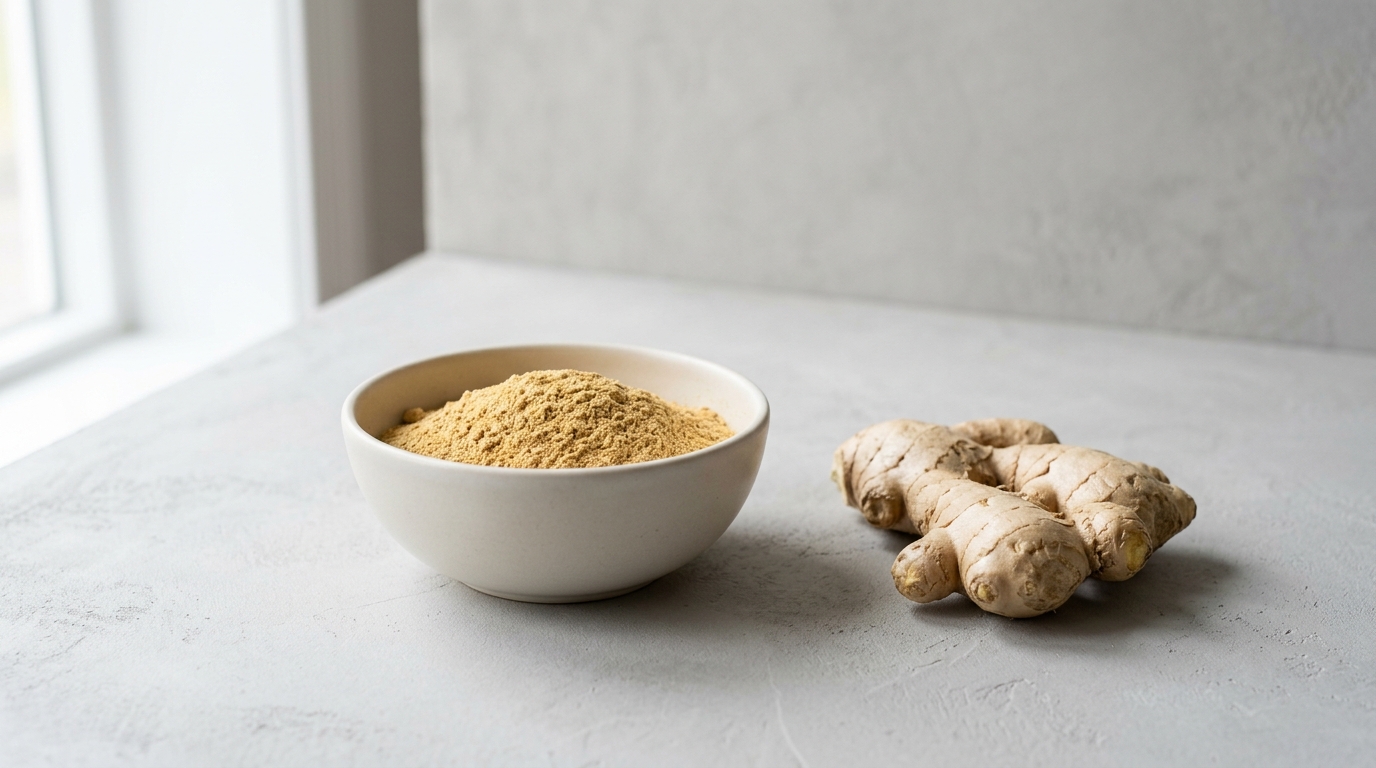
For commercial food manufacturers, substituting raw fresh ginger rhizomes with bulk Dehydrated Ginger Powder delivers an immediate 35% to 55% reduction in total cost of ownership (TCO). With a 1:6 yield conversion ratio, ginger powder eliminates peeling and trimming scrap, reduces maritime freight and cold-chain warehousing costs, and guarantees year-round active volatile oil levels (≥ 1.5%) and standardized heat profiles.
Furthermore, with a moisture threshold of max 4.85% and water activity ($a_w < 0.50$), dehydrated ginger powder provides an 18- to 24-month ambient shelf life while eliminating field-spore microbial risks inherent to raw soil-grown roots. Sourcing export-grade ginger powder through Lokavia's verified Indian supply chain enables seamless dry-blend automation, precise batch dosing, and full lot-by-lot batch traceability with MOQ starting at 2,000 kg.
The Industrial Dilemma: Fresh Rhizome vs. Dehydrated Powder
Industrial food scientists, production heads, and spice procurement managers must deliver authentic, pungent ginger flavor while maintaining factory throughput, predictable unit margins, and strict microbiological safety.
In commercial processing producing thousands of kilograms daily, fresh ginger introduces severe operational friction:
- High Perishability and Spoilage: Fresh rhizomes contain 82% to 90% water, making them susceptible to fungal rot, internal breakdown, and sprouting within 2 to 4 weeks.
- Heavy Scrap & Labor Losses: Trimming, washing soil residues, sorting rot, and peeling result in 20% to 30% unrecoverable waste of raw incoming weight.
- Batch-to-Batch Variance: Flavor strength and solids fluctuate based on harvest rainfall, age, and soil moisture, forcing continuous recipe recalibration.
- Logistical Inefficiency: Sourcing fresh root requires refrigerated containers (+12°C to +14°C at 85%–90% RH), paying freight on 85% water.
1. Direct Conversion Economics & Total Cost of Ownership (TCO)
Evaluating ingredient cost solely by spot price per kilogram on raw roots is a common procurement pitfall. Fresh ginger appears cheaper per kilogram at the farm gate, but its effective cost per kilogram of dry flavor solids is substantially higher.
The 1:6 Dehydration & Dry Solids Ratio
Fresh ginger rhizomes consist of approximately 85% moisture and 15% dry matter. High-grade dehydrated ginger powder from India is processed down to a maximum moisture content of ≤ 4.85% (yielding over 95% active spice solids).
On average, 1 kg of premium dehydrated ginger powder replaces 5.5 to 7.0 kg of raw, unpeeled fresh ginger root in standardized commercial food formulations.
Factory Cost Drivers Comparison
| Operational Cost Component | Fresh Ginger Rhizomes | Export-Grade Dehydrated Ginger Powder |
|---|---|---|
| Dry Solids Content | 10% – 18% (Water content 82%–90%) | ≥ 95% Active Spice Solids (Moisture ≤ 4.85%) |
| Preparation Scrap & Waste | 20% – 30% loss from skin, fibrous ends, rot sorting | 0% Scrap (100% dosable ingredient) |
| In-Plant Labor & Machinery | Requires abrasive peelers, dicers, wet wet-grinders, CIP cleaning | Zero prep; directly metered into dry blenders or wet kettles |
| Transport Logistics | Reefer container (+12°C to +14°C); paying freight on 85% water | Ambient dry container (12–14 MT per 20ft FCL in multi-wall bags) |
| Cold Storage Warehousing | High energy cost; dedicated humidity-controlled cold rooms | Standard ambient warehouse (≤ 22°C, RH ≤ 55%) |
| Effective Cost per Kg of Flavor | Baseline + 40% to 65% hidden overhead | Optimal (Predictable, fixed per-metric-ton unit economics) |
10,000 kg Production Batch Comparison
- Fresh Ginger Route: Sourcing 10,000 kg raw ginger yields 7,500 kg usable puree after 25% peeling and decay losses, requiring continuous cold-chain freight and dedicated preparation labor.
- Dehydrated Ginger Powder Route: Requires only 1,500 kg powder (1:6.67 equivalent) with zero trimming scrap, ambient shipping, and direct batch metering—resulting in 35% to 55% net savings.
2. Sensory & Chemical Consistency: Gingerol vs. Shogaol
In commercial consumer packaged goods (CPG), brand loyalty depends on consistent flavor delivery across every production batch:
- [6]-Gingerol: The dominant bioactive in fresh ginger rhizomes. It delivers a sharp, clean pungent bite with a light herbaceous note, but degrades unpredictably under environmental heat, alkaline pH, and storage.
- [6]-Shogaol: Formed when [6]-gingerol dehydrates during controlled drying and thermal processing. [6]-Shogaol is approximately 1.5 to 2.0 times more pungent than [6]-gingerol, providing deep, lingering throat-heat and stable pungency.
- Zingerone: Formed through prolonged heating, providing mild, sweet, balsamic pungency.
In contrast, Lokavia's export-grade dehydrated ginger powder undergoes standardized, low-temperature belt dehydration (50°C–60°C) that stabilizes the bioactive ratio with guaranteed volatile oil content of ≥ 1.5%.
Standard Mesh Sizes for Industrial Blending:
- 60–80 Mesh (Coarse Powder): Visible rustic specks in artisan cookies, dry spice rubs, and extruded snack doughs.
- 80–100 Mesh (Standard Export Grade): Industry standard for dry soup bases, instant ramen seasoning sachets, and curry powders.
- 100–120 Mesh (Fine Flour): Ultra-fine dispersion for RTD powdered drink mixes, nutraceutical capsule filling, and smooth emulsions.
3. Shelf Life, Water Activity, and Microbiological Safety
Food safety standards—including FSMA (USA), BRCGS, IFS Food, and EU Food Safety Regulations—mandate strict control over water activity and microbial spore counts in commercial ingredients:
| Parameter | Fresh Ginger Rhizomes | Lokavia Dehydrated Ginger Powder | Technical Implication |
|---|---|---|---|
| Moisture Content | 82.0% – 90.0% | ≤ 4.85% (Max 5.0%) | Dehydrated powder is chemically stable |
| Water Activity ($aw$) | $0.98 - 0.99$ | $0.35 - 0.48$ | Bacteria cannot reproduce below $aw < 0.85$; molds inhibited below $a_w < 0.60$ |
| Ambient Shelf Life | 14 – 28 Days (Refrigerated) | 18 – 24 Months (Ambient) | 24x longer inventory flexibility |
| Degradation Mode | Mold, wet rot, sprouting, shriveling | Slow volatile oil oxidation if unsealed | Zero risk of rotting or enzymatic browning |
| Storage Temperature | +12°C to +14°C (Cold Chain mandatory) | ≤ 22°C (Standard ambient storage) | No refrigeration electrical overhead |
Microbiological Standards
Export-grade dehydrated ginger powder from India is processed under strict GMP protocols:
- Total Plate Count (TPC): Standard grade $\le 50,000$ CFU/g; steam-sterilized grade $\le 5,000$ CFU/g.
- Yeast & Mold: $\le 100$ CFU/g.
- E. coli & Salmonella: Absent in 1g / 25g.
- Enzymatic Inactivation: Controlled drying deactivates polyphenol oxidase (PPO), preventing enzymatic browning.
4. Manufacturing Process Engineering: Wet vs. Dry Operations
Process Workflows
- Dry Applications (Bakery, Seasonings, Snack Pellets, Drink Mixes):
- Wet Applications (Sauces, Marinades, Soups, Beverages):
- Dry Blending Systems: Fresh ginger cannot be used in dry mixes due to water content causing lump formation and localized mold. Dehydrated ginger powder blends homogeneously with Dehydrated Onion Powder and Garlic Powder.
- Commercial Bakery: Fresh ginger puree injects excess unmetered water that disrupts gluten formation and tunnel oven spread ratios. Dehydrated powder distributes evenly without altering hydration balances.
- Beverage & Tea Blending: Dehydrated ginger powder or crushed dried flakes deliver clear, consistent infusions without cloudy suspensions or unsightly sediment.
5. Technical Comparison Matrix
| Parameter | Fresh Ginger Rhizome | Lokavia Dehydrated Ginger Powder | Advantage |
|---|---|---|---|
| Physical State | Fibrous, irregular solid root | Free-flowing, uniform milled powder | Dehydrated Powder |
| Moisture Content | 82.0% – 90.0% | ≤ 4.85% | Dehydrated Powder |
| Volatile Oil Content | 1.0% – 2.5% (Fresh basis) | ≥ 1.5% (Dry basis; concentrated) | Dehydrated Powder |
| Primary Pungent Compound | [6]-Gingerol (Labile) | [6]-Gingerol + [6]-Shogaol (Thermally stable) | Dehydrated Powder |
| Dosing Accuracy | Variable (moisture-dependent) | Precision automated gravimetric dosing | Dehydrated Powder |
| Microbiological Load (TPC) | $10^6 - 10^7$ CFU/g (Soil flora) | ≤ 50,000 CFU/g (Standard) / ≤ 5,000 (Steam treated) | Dehydrated Powder |
| Storage Temperature | +12°C to +14°C (Refrigerated) | Ambient (≤ 22°C, RH ≤ 55%) | Dehydrated Powder |
| Shelf Life Stability | 2 to 4 weeks | 18 to 24 months | Dehydrated Powder |
| Processing Scrap | 20% to 30% peeling/rot waste | 0% waste | Dehydrated Powder |
| Freight Efficiency | High (shipping 85% water + reefers) | Low (100% dry solids in dry containers) | Dehydrated Powder |
6. Sourcing Checklist for Procurement Teams
When contracting dehydrated ginger powder for industrial applications, verify four technical criteria on the Certificate of Analysis (CoA):
- Origin Cultivar Profile:
- Cochin Ginger (Kerala): Light buff color, low fiber, delicate citrus-ginger aroma, and high volatile oil (ideal for beverages and premium bakery).
- Assam & Northeast Ginger: Grown in organic biodiversity belts; features robust dark-golden hue, deep pungent bite, and elevated shogaol potential.
- Volatile Oil Quantification: Measured by ASTA Method 16.0 / ISO 6571 (Clevenger distillation) exceeding ≥ 1.5% v/w.
- Sulfur Dioxide ($SO_2$) Absence: Non-sulfured processing without chemical bleaching agents.
- Pesticide MRLs and Heavy Metal Screening: Full compliance with EU Regulation (EC) No 396/2005 and US FDA food safety limits for lead, cadmium, and arsenic.
Frequently Asked Questions (FAQ)
What is the exact substitution ratio of ginger powder to fresh ginger?
In commercial food manufacturing, the standard substitution ratio is 1 part dehydrated ginger powder to 6 parts fresh grated ginger by weight (1 kg powder per 6 kg fresh root). For unpeeled whole root, use a 1:7 ratio to account for peeling and trimming scrap.Why does ginger powder taste hotter than fresh ginger?
Ginger powder tastes hotter because the controlled drying process dehydrates [6]-gingerol into [6]-shogaol. On the Scoville heat index, [6]-shogaol is roughly 1.5 to 2.0 times more pungent than gingerol, delivering a more intense, lingering thermal sensation.Does ginger powder dissolve completely in liquids?
Dehydrated ginger powder is an insoluble botanical root powder that forms a fine colloidal suspension. For crystal-clear beverages, manufacturers use water-soluble ginger oleoresins or steam-distilled ginger essential oils, or steep fine 100-mesh powder followed by mechanical filtration.How should bulk ginger powder be stored to preserve volatile oils?
Store in a cool, dry warehouse below 22°C (71°F) at a relative humidity of ≤ 55% RH. Keep product sealed in multi-wall kraft paper bags with heavy-duty polyethylene liners. Protect bags from direct sunlight and store on raised pallets away from masonry walls.Can dehydrated ginger powder be rehydrated back into ginger paste?
Yes. Food processors can rehydrate 1 kg of dehydrated ginger powder with 5 to 6 kg of potable water and mix in a high-shear kettle to create a consistent, fiber-free ginger slurry or paste for sauces, marinades, and condiments.Partner with Lokavia for Bulk Ginger Powder Sourcing
Lokavia International exports premium Dehydrated Ginger Powder, Dehydrated Onion Powder, and Garlic Powder directly from certified production belts in India to food manufacturers, packers, and distributors worldwide.
- Minimum Order Quantity (MOQ): 2,000 kg (2 Metric Tons) per SKU
- Packaging Options: 25 kg multi-wall kraft paper bags with food-grade PE inner liner, or bulk 500 kg jumbo bags
- Compliance Documentation: Batch-specific CoA, Phytosanitary Certificate, Non-GMO Declaration, Heavy Metal Analysis, and Certificate of Origin